

What You’ll Learn
How does hard water affect a water heater?
When hard water is heated, the minerals separate from the water and solidify into hard scale in your tank. This causes issues with your tank, like higher energy bills, destroying the anode rod faster, decreased efficiency, and element burnout, leading to more frequent repairs.
In this blog
James ignored all the hard water red flags.
He brushed off the popping sound coming from his water heater in the basement.
He ignored the residue accumulating around his shower head.
Worst of all, he wrote off a small puddle under his water heater as no big deal.
Now, while trying to take a relaxing shower, the red flags came back to bite.
James was left with an ice bath when his water heater finally lost its battle with hard water.
What Exactly is Hard Water?
Hard water isn’t “tough” to the touch.
It’s water that carries a high concentration of dissolved minerals, specifically calcium and magnesium. As groundwater travels through the natural limestone formations common in our region of Pennsylvania, it picks up these mineral deposits.
While hard water is completely safe to drink, it behaves badly when it gets hot.
Inside your water heater, the high temperatures cause these dissolved minerals to solidify and drop out of the water.
They settle onto the hottest parts of your appliance, forming a rock-hard, chalky white crust known as limescale or calcium carbonate.
4 Common Ways Hard Water Destroys Your Water Heater
If you leave hard water unmanaged, it acts like a ticking clock for your system. Here are the four most common issues it creates:
1. Decreased Efficiency and Skyrocketing Bills
Water heating accounts for roughly 17% of your home’s total energy consumption.
When limescale coats the bottom of a gas tank or wraps around an electric heating element, it acts like a thick layer of insulation.
The burner or element has to heat up that layer of stone before it can even begin to warm the water.
Just 1/4 inch of scale buildup can slash your water heater’s energy efficiency by up to 40%, forcing the unit to run longer and driving up your utility bills.
2. Thick Sediment and Scale Buildup
Over time, loose pieces of scale break off and accumulate at the bottom of the tank, forming a thick layer of sludge.
In electric water heaters, this sediment can completely bury the lower heating element, causing it to overheat and experience “element burnout” where the metal literally snaps under the extreme thermal stress.
3. Leaks and Corrosion
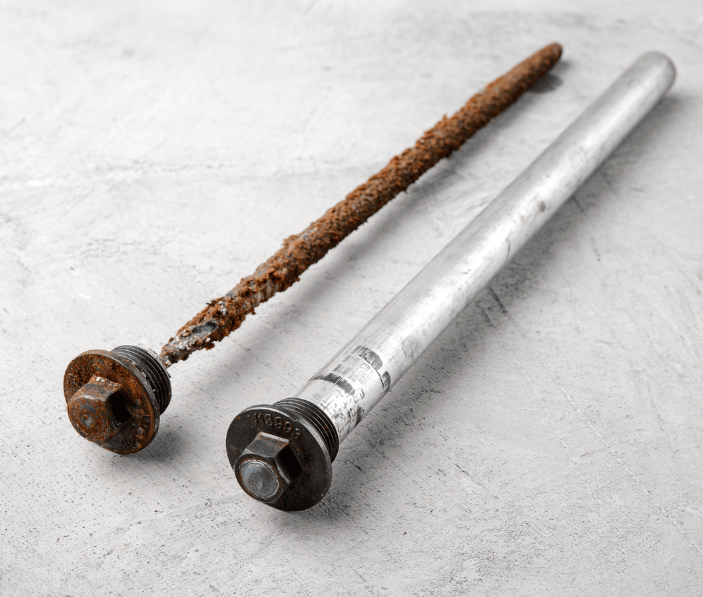
To protect steel tanks from rusting, every traditional water heater contains a sacrificial anode rod. This magnesium or aluminum rod is designed to naturally attract corrosive elements, rusting away so your steel tank doesn’t have to.
However, hard water forces the anode rod to work double-time. It can completely eat through a standard rod in just a year or two, while an anode rod not facing hard water challenges can last 5 years.
Once the rod is gone, the corrosive minerals turn their attention to the steel walls of your tank, leading to rust, cracks, and leaks ranging from drips to a flooded basement.
4. Strange Noises (The “Kettling” Effect)
If you’ve ever heard your water heater making a loud popping, banging, or rumbling sound, that’s a major warning sign.
When water gets trapped underneath the heavy crust of sediment at the bottom of the tank, the burner boils that trapped water into steam. The steam bubbles explode as they burst through the mineral crust, creating a loud noise.
It sounds scary, and it means your system is under immense stress.
The First Line of Defense: Temporary Fixes
If you suspect hard water is already taking a toll on your system, don’t panic. There are three standard, reactive measures you can take right away to reverse the damage:
Flush the Tank
Attaching a garden hose to the drain valve at the bottom of your heater allows you to drain the tank completely and flush out loose sediment. Doing this annually keeps the floor of your tank clean.
Descale with Vinegar
For stubborn, hardened scale, a vinegar flush works wonders. Because limescale is alkaline, a mild acid like household white vinegar dissolves the calcium buildup safely without harsh chemicals.
Homeowners often drain the system, pour in several gallons of vinegar, let it sit for a few hours to break down the rock, and then flush it clean with fresh water.
Replace the Anode Rod
If you have hard water, check your anode rod every two years. Spending $30 on a fresh rod and taking an hour to swap it out can easily add five to ten years to the lifespan of your water heater.
Lower the Water Heater Temperature
A completely free, immediate step you can take today is checking your water heater’s thermostat.
The hotter the water, the faster mineral scale precipitates out of it.
Many manufacturers set water heaters to 140°F out of the box. By turning the dial down to 120°F, you significantly slow down the chemical reaction that creates scale, reduce the risk of accidental scalding, and instantly shave dollars off your monthly energy bill.
Stopping the Source: Long-Term Solutions
While flushing and replacing rods manage the symptoms, this doesn’t fix the root problem.
To truly protect your home investment, you need a long-term strategy to neutralize the hard water before it ever touches your heater.
Add a Scale Filter (Water Conditioner)
If you prefer a salt-free alternative, a specialized scale filter or water conditioner can be installed directly on the cold water supply pipe leading into the water heater.
These systems don’t remove the minerals, but they alter their chemical structure so they cannot bind together or stick to hot metal surfaces.
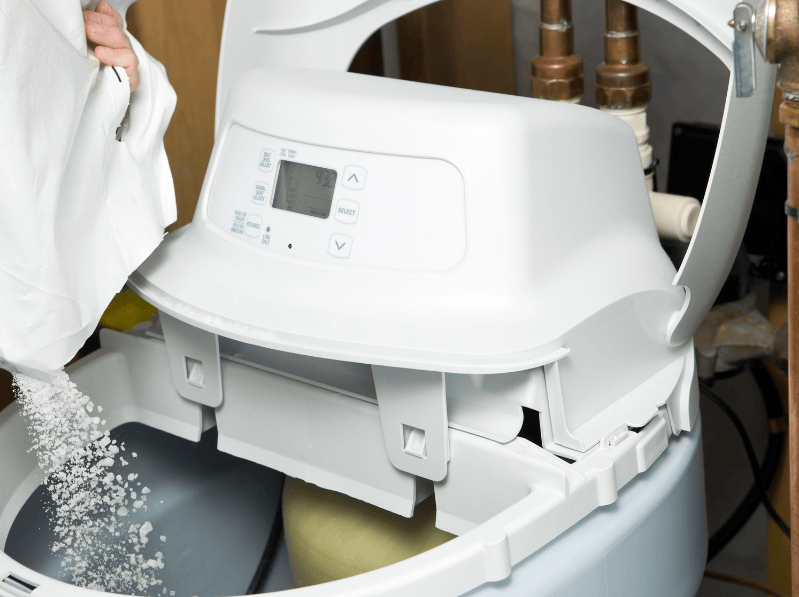
Install a Whole-House Water Softener
This is the gold standard solution.
Water softeners use a process called ion exchange to swap out the troublesome calcium and magnesium ions for harmless sodium ions.
By softening the water at your home’s main water line, you prevent scale from forming in your water heater, your dishwasher, and your showerheads.
Patch Up Your Hard Water Defense
Hard water might be a silent threat, but it’s completely manageable.
By combining simple, proactive maintenance, like annual tank flushes, with long-term solutions, like lowering your temperature or installing a water softener, you can look forward to long, hot showers and a predictable budget for years to come.
If you need a clean slate or starting point with your water heater, we’re ready to help.
Contact Sperr’s Fuel and Heating to get your water heater inspected or replaced.

FAQs
How do I know if I have hard water affecting my water heater?
The most common signs include a white, chalky crust (limescale) building up on your sink faucets, a drop in hot water pressure, higher-than-usual energy bills, or a strange popping and rumbling sound coming from your basement water heater tank during a heating cycle.
How often should I flush my water heater if I have hard water?
While a standard home can get away with a flush every few years, households dealing with moderate to severe hard water should flush their water heater tank at least once a year.
Regular flushing prevents loose mineral sediment from hardening into a solid, unremovable block of rock at the bottom.
Is it safe to use vinegar to descale my water heater tank?
Usually, ordinary store-bought white vinegar is safe and highly effective at dissolving calcium scale.
However, a critical safety warning: if your heater uses a standard aluminum anode rod, the rod must be removed before introducing vinegar, as the acid can react with aluminum to produce hazardous gases.
Can a water softener reverse existing scale damage inside a heater?
A water softener stops new scale from forming immediately, but it cannot easily dissolve thick layers of stone that have already baked onto the bottom of an old tank over several years.
For older systems, you should perform a manual flush and descaling treatment alongside installing a water softener.