
What You’ll Learn
What does a home inspector check in an oil heating system?
Home inspectors focus on safety, leaks, and code compliance.
They examine your tank’s condition, piping, furnace functionality, and any signs of past problems.
Knowing what they check—and addressing issues early—means no surprises on sale day.
In this blog:
The home inspector is scheduled to visit tomorrow.
Nancy knows that the roof is solid—replaced three years ago. The siding? New last spring. The wiring is all good, the pipes don’t leak, and the fresh coat of paint makes the home look brand new. All of it is ready for its close-up.
Suddenly, she remembers the furnace.
That old thing in the basement she’s walked past a thousand times without a second thought. The one she’s never once worried about because it just… works.
Until someone else looks at it.
What if there’s something seriously wrong, and the sale falls through? What if fixing whatever they find puts a hole through my wallet? What if, what if, what if…
Don’t give in to those racing thoughts.
Here’s exactly what inspectors check—and how to make sure your system passes.
5 Things Home Inspectors Check in Your Oil Heating System
Inspectors follow a checklist when they walk up to your tank. They’ve seen hundreds of systems. They know where problems hide.
Here’s what they look at—and why it matters to your sale.
1. Tank Condition: The Heart of the System
Inspectors start at the tank. It’s the most visible component and the most expensive to fail.
What they check:
- Visible rust and corrosion, especially on the bottom and along seams
- “Weeping” or oily residue on the tank surface
- The tank’s approximate age (20 years and over is a red flag)
- Support stands or legs (tanks must be stable, not sagging)
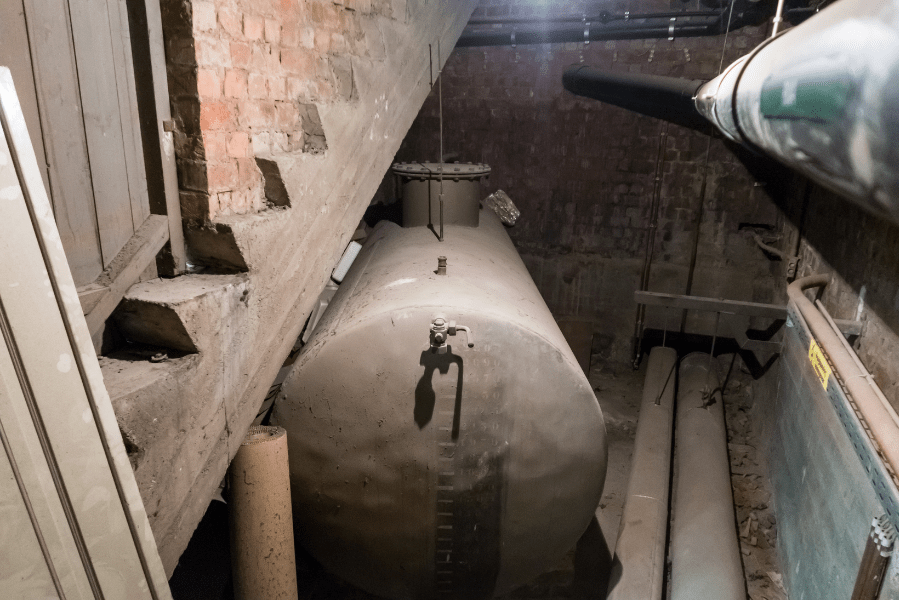
A leaking tank can cause soil contamination and costly cleanup. Buyers won’t assume the risk that comes from having a rusty, leaking tank. A tank with significant rust or a visible leak typically requires replacement before a sale can close.
2. Piping and Lines: Ensuring Leak-Free Delivery
The tank might appear sound, but the supply lines tell their own story.
What they check:
- Copper or braided lines for wear, kinking, or damage
- Connections at the tank and furnace (loose fittings leak)
- Protective shielding where lines are exposed
- Dark stains on the floor or ground beneath lines
Leaking supply lines are both an environmental hazard and a fire risk. Clean, secure lines signal a well-maintained system. Old, unprotected tubing raises immediate questions.
3. Safety and Code Compliance: Following the Rules
Local building codes exist for a reason. Inspectors look for visible safety issues and installations that appear inconsistent with common building standards.
What they check:
- The vent pipe (clear, properly sized, free of rust)
- The fill pipe and whistle vent (visible and accessible)
- Shut-off valves (functional and easy to reach)
- The oil filter (recently changed, no leaks)
- Clearances from combustible materials
A blocked vent pipe prevents the tank from breathing during filling. This creates a pressure hazard for the delivery driver and the home’s occupants. Blocked or undersized vents are common safety violations.
4. Furnace Functionality: Performance Under Pressure
Inspectors typically run the furnace through one heating cycle to observe performance.
What they check:
- Clean burner ignition (no delayed start or puffback)
- Unusual noises or odors during operation
Oil-fired furnaces require annual maintenance to operate safely. A layer of soot suggests incomplete combustion and neglected service.
5. The “Hidden” Risk: Underground Tanks
If your property has an underground oil tank, this section applies directly.
Having an underground oil tank can be, in and of itself, a red flag, as it is difficult to properly maintain them or check for leaks.
What they check:
- The fill pipe location and condition
- Vent pipe visibility and accessibility
- Soil discoloration or dead vegetation near the tank location
- Records of past inspections, replacements, or removals
Many buyers will not purchase a home with an active underground tank without a professional inspection. Some lenders require tank removal or abandonment before financing approval.

Common Issues Inspectors Flag
While any of the “checks” above can be a bump in the road during a home sale, the following are the ones that regularly appear on inspection reports.
Make sure to have a technician check your system for these:
- Clogged or old oil filters: A filter not changed in years suggests the rest of the system lacks maintenance.
- Faulty or broken gauges: A non-functioning gauge leaves the next owner guessing when to order oil. Inspectors note it as a deficiency.
- Water buildup in the tank: Water enters through condensation or degraded fill caps. It causes internal rust and microbial growth, which leads to sludge and clogs.
- Heavy soot accumulation: Soot inside the burner compartment or around the flue indicates poor combustion—and potential carbon monoxide risk.
- Poor venting: A vent pipe that’s rusted, undersized, or improperly sloped fails code and appears on most inspection reports.
Get Your System Sale-Ready Before the Inspector Arrives
Your heating system has kept your family warm for years. Now let it help you sell.
Contact Sperr’s Fuel and Heating to schedule your pre-inspection check. Walk into your home sale with confidence, not crossed fingers.
FAQs
What does a home inspector look for in an oil tank?
Inspectors check for visible rust, corrosion, oily residue (weeping), and the tank’s overall stability.
They look at seams, legs, or supports, and the area around the tank for stains. If the tank shows signs of age or leaking, it becomes a major negotiating point.
Can a home sale fail because of the oil heating system?
Yes. Significant issues—a leaking tank, underground tank concerns, or code violations—can halt a sale or require expensive fixes before closing.
Buyers won’t assume responsibility for environmental hazards or unsafe equipment. A pre-inspection catches these early.
How do I know if my oil tank will pass inspection?
Look for visible rust, especially near the bottom.
Check for dampness or stains underneath. Make sure the gauge works and the fill pipe is accessible. If your tank is over 20 years old, have a professional assess it before listing.
Do I need to service my furnace before selling?
It is strongly recommended to service your furnace before selling your home. A clean burner, fresh oil filter, and documented maintenance history reassure buyers and inspectors.
It shows the system has been cared for and reduces the chance of performance issues during the inspection.
What happens if the inspector finds a problem?
You have options: fix it before closing, offer a credit to the buyer, or adjust the sale price.
The worst outcome is discovering the issue during the inspection with no time to address it.
A pre-inspection puts you in control.