
What You’ll Learn
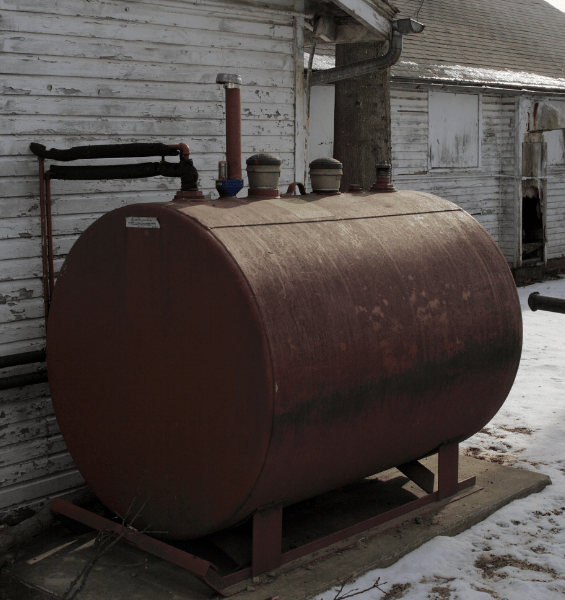
How do I protect my outdoor oil tank from Pennsylvania snow and ice?
Install a ventilated shelter to block falling ice and prevent snow from piling up, keep your tank adequately filled to minimize condensation and rust, clear snow carefully to prevent physical damage and blocked pipes, and have your provider use professionally treated fuel to stop the oil from gelling in the cold.
These actions prevent the most common and costly winter failures.
In this blog:
A blanket of snow gathers in your yard.
Some of it even piles up against your oil tank.
You think it’s a beautiful sight.
But it’s not ideal for your tank.
Snow and ice can sabotage your heating system.
The cold from these can freeze vents, gel oil, clog lines, and allow moisture in to rust your tank from the inside.
This can make your furnace stop working overnight.
Learn how to stop these problems and keep your heat running all winter.
How Snow and Ice Damage Your Oil Tank
Your tank faces a few winter threats. You need to know what they are.
Crushing Damage from Falling Ice
Ice and snow are much heavier than you think.
If ice falls from your roof and hits your tank, it could be with the force of a hammer.
The PA Department of Environmental Protection lists checking for this risk as a winter safety priority for a good reason.

This impact can dent the tank, crack the fill pipe, or break the gauge. The result is an immediate leak or a furnace that can’t get oil.
Clogged Lines from Gelling Fuel
Heating oil contains natural paraffin (wax). In extreme cold, this paraffin can crystallize (harden) and turn the oil into a thick sludge.
This sludge blocks your fuel filter and supply line completely.
Your burner is then starved for fuel.
This is why many “no heat” calls happen during a freeze.
Internal Rust from Condensation
An outdoor tank goes through daily temperature swings. As it cools at night, your tank “breathes,” or contracts, which pulls in air from outside the tank.
That air holds moisture, and when the tank walls get cold, that moisture turns to water.
As the water sinks and slides along the sides of your tank, it starts rusting your tank from the inside.
Rust flakes then clog your system.

This water can also cause microbial growth inside your tank, which increases the likelihood of sludge and clogging.
Dangerous Blocked Vents
Your oil tank has a small vent pipe, typically near the fill cap.
Its job is to let air escape when the tank is being filled, like the whistle on a tea kettle.
If this vent is buried by snow or plugged with ice, the tank can’t breathe. This causes dangerous pressure to build during a delivery and can prevent your furnace from operating.
Important Note: Your furnace has a separate exhaust flue. It is equally critical to keep that vent clear of snow and ice to prevent carbon monoxide from backing up into your home.
Your 4-Step Winter Protection Checklist
Fortunately, there are a few things you can do to protect your tank, furnace, and home from winter’s chill.
Step 1: Install a Ventilated Shelter
Use a commercially available vented tank cover or build a simple lean-to shelter with a sloped roof and open sides.
It blocks falling ice and heavy snow, and the ventilation stops moisture buildup underneath.
Make sure it is secure so that it doesn’t blow away in a storm.
Step 2: Keep the Tank Over Half Full
Don’t let your tank run near empty during the winter months.
Less air space means less condensation, and that is the best way to prevent internal water. It also gives you a fuel buffer if bad weather delays a delivery.
Step 3: Clear Snow the Right Way
After a snowstorm:
- Gently brush snow off the tank.
- Remove snow from the roof above the tank.
- Shovel a clear path to the fill pipe.
- Clear your vent pipe of snow as well.
This prevents the crushing weight of snow build-up. Besides, your delivery driver will always need a clear path to your tank.
Step 4: Insist on Treated Fuel
Your oil should contain anti-gel additives.
If it doesn’t, or you don’t know what additives are in your oil, ask your provider!
Do not attempt to pour additives into your tank yourself. Improper use can damage your heating system.
The right professional blend does more than prevent gelling; it includes stabilizers and conditioners that keep your entire system running cleanly.
At Sperr’s, this treatment is our standard. Every gallon of our ultra-low sulfur oil is pre-treated, so you never have to worry about it.
The Simpler Way with Sperr’s Fuel
We designed our service to handle these problems for you.
- Automatic Delivery means we manage your fuel level. We track usage and weather to keep your tank adequately filled, helping you stick to the “half-full” rule.
- Treated Fuel is our standard. Every gallon of our ultra-low sulfur oil includes additives to prevent gelling. You don’t have to request it.
- Local, Reliable Service is our foundation. As a family business, we know how to navigate winter here. Our drivers ensure you get your fuel safely and on time.
Don’t Gamble on a Mild Winter. Guarantee Your Warmth.
Snow is pretty, but not on your tank.
Taking these steps removes the risk and stress.
You protect your appliance, your comfort, and your family from the chill.
Contact Sperr’s Fuel and Heating today. Sign up for automatic delivery and secure your winter fuel.
FAQs
How exactly does keeping my tank fuller prevent rust?
A fuller tank has less air space inside. When the temperature changes, moist air from outside gets pulled in and condenses on the cold interior walls, creating water.
By minimizing the air volume, you drastically reduce the amount of water that can form and cause internal rust.
What is the difference between the tank vent and the furnace vent?
The tank vent is a small pipe on the tank itself that releases air during filling.
If blocked, it causes delivery issues and pressure buildup.
The furnace vent (or flue) exhausts combustion gases, including carbon monoxide, from your burner.
Both must be kept clear of snow and ice for safety and operation.
What is a ventilated shelter?
A ventilated shelter has openings or mesh sides to allow air to circulate while the sturdy structure acts as a roof over your vent.
It protects your vent from snow accumulation, which prevents serious issues such as pressure buildup.
Can I treat my oil myself with store-bought additives?
It is not recommended. Adding the wrong type or amount of aftermarket additive can damage your fuel pump, clog nozzles, and void warranties.
Fuel treatment is best left to professionals who use precise, system-safe formulations blended at the terminal.